Expert Garage Repair: Restoring Safety and Function to Your Home
June 24, 2026
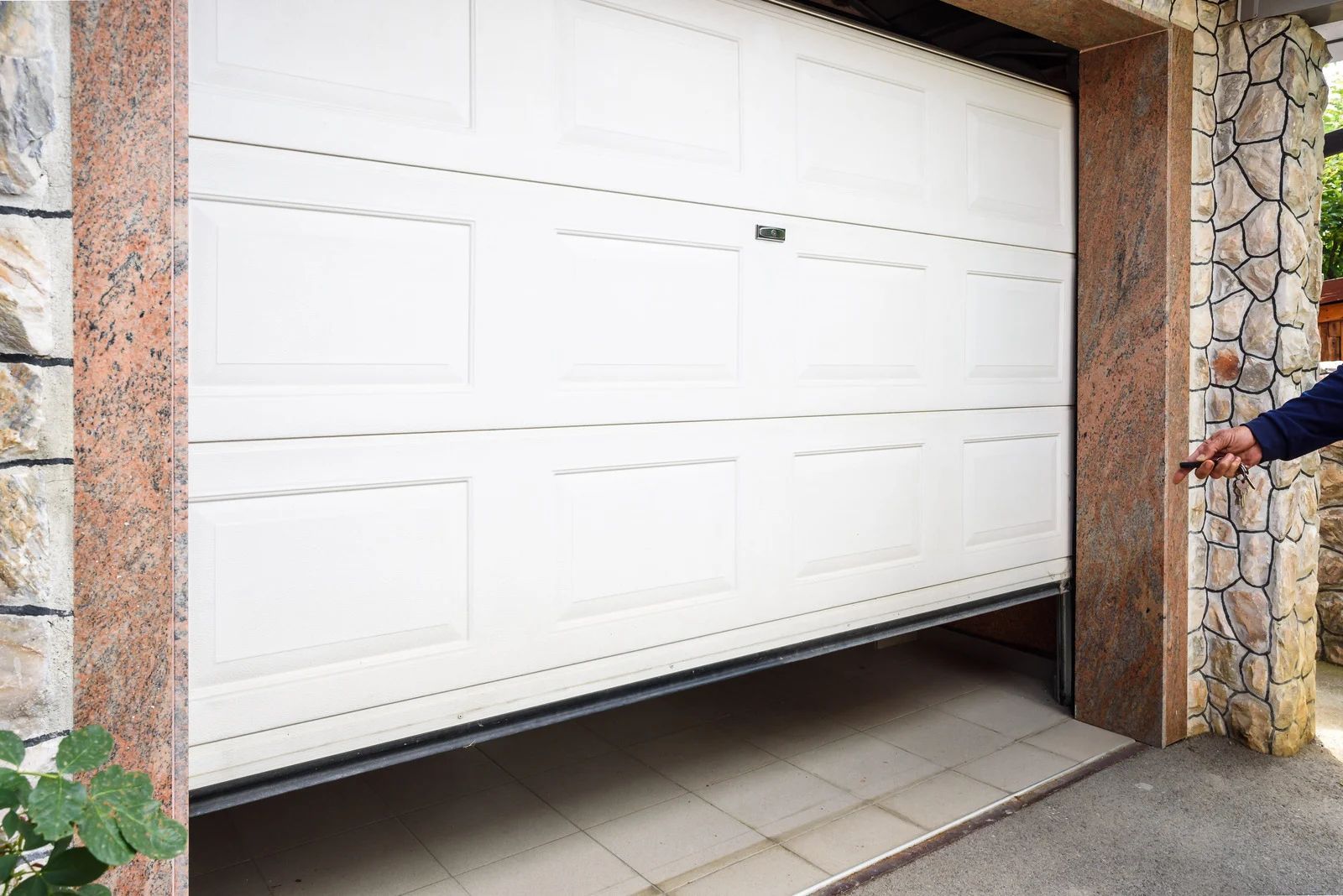
You hit the button on your way out, the door lifts a foot, then stops and hangs there crooked. Or it slams down harder than it should, panels rattling like something inside finally gave up. You are standing in the garage, keys in hand, already late, wondering whether you can leave the house with the door stuck halfway.
Here is what you need to know first. A garage door that suddenly quits is rarely a mystery. One of a few parts under heavy load wore out, and the symptom points straight to it. The real danger is not the hassle. It is the spring and cable system holding hundreds of pounds of tension above your head. After years of working on doors that jerked, fought back, or refused to move, we can tell you that reading the signs early keeps a simple garage door repair from becoming a broken door or a hurt hand.
What to Do the Moment Your Door Acts Up
Stop using the door. Every extra cycle adds strain and risk. Pull the red release cord to disconnect the opener, then lift the door by hand. A healthy door glides up and stays put near waist height. If it drops or feels as heavy as a loaded wheelbarrow, the spring is gone.
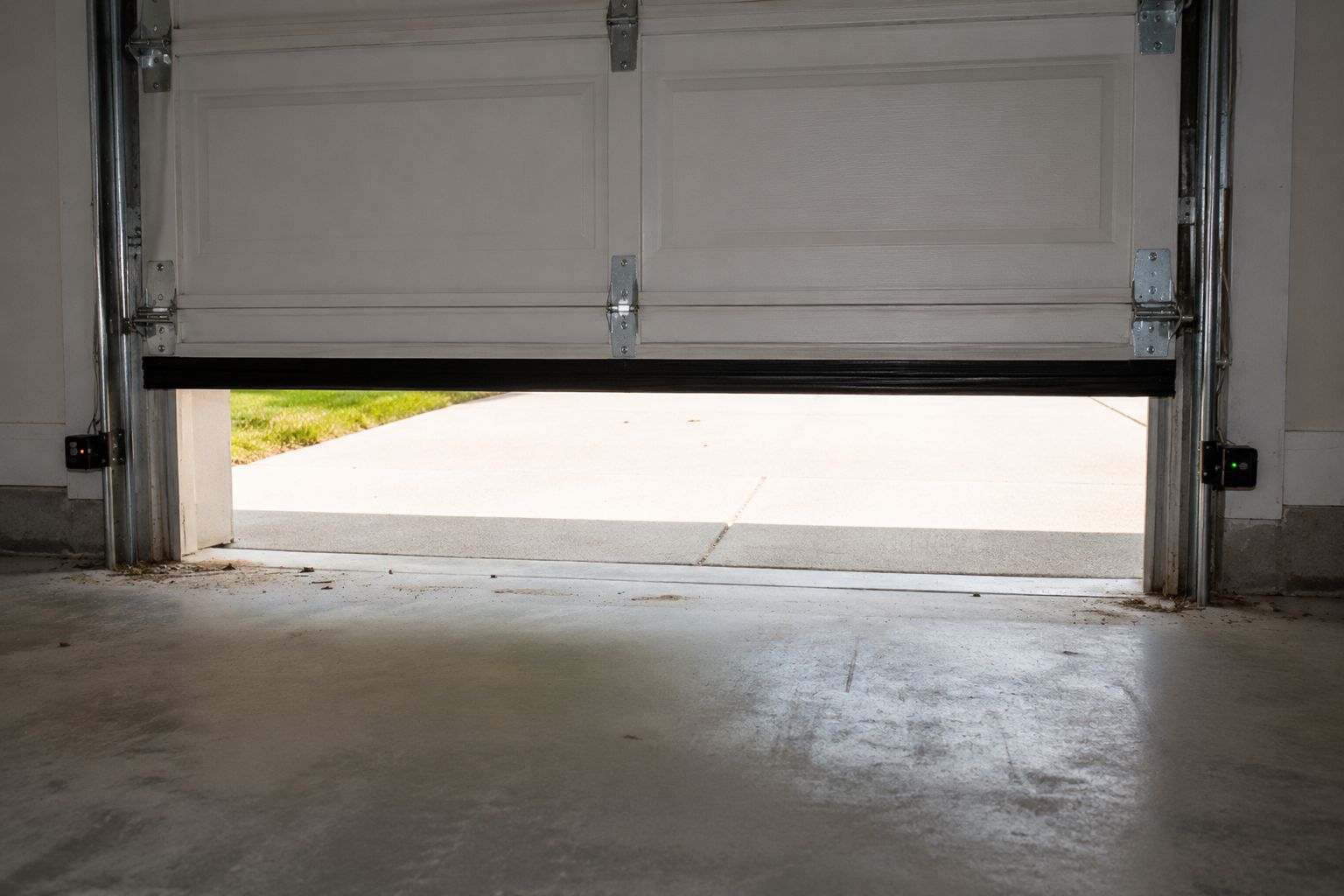
Check the photo eye sensors near the floor on both sides. A door that reverses before closing usually has one knocked out of line or fogged with dust.
WARNING: Never loosen or touch the torsion spring above the door or the cables running down each side. They hold enough stored force to break bones in an instant if they let go.
TIP: Run the door once with the light on and note where it sticks, jerks, or makes noise. That points us to the failing part before we arrive.
What Is Actually Going Wrong
Broken springs cause more failures than everything else combined. The torsion spring above the door winds and unwinds every cycle until the steel fatigues and a coil snaps, often with a bang like a gunshot. Most are rated near 10,000 cycles, roughly seven years of daily use. Once it breaks, the opener cannot lift the weight, and the door barely moves.
Frayed cables come next. These steel lines carry the load alongside the springs, and when a strand snaps or a cable jumps its drum, the door rises crooked or jams.
Worn rollers and bent tracks make a door grind and stick at the same spot each time. And the opener itself fails too. A unit that hums without moving usually has a stripped drive gear or a tired logic board. Cold dry air out here thickens old grease and makes a worn opener struggle even harder on January mornings.
How We Diagnose a Failing Door
We start where the load is. First we disconnect the opener and lift the door by hand, because a heavy door tells us the spring is gone before we look anywhere else. Next we run a full cycle and watch where the door hesitates, listening for a bad roller or a loose cable.
Then we check the spring coils for gaps, the cables for fray, the rollers for flat spots, and the auto reverse safety, which should stop and lift the door the instant it meets resistance.
Your Repair Options
Some fixes are safe to do yourself. Cleaning and realigning the sensors, tightening loose hinges, and lubricating rollers with a garage door spray are reasonable weekend jobs.
Spring and cable work is not on that list. Replacing a torsion spring means controlling that stored tension safely, matching the wire size to your door weight, and balancing both sides. We carry the spring sizes that fit the doors common around here and swap them in one visit. The same goes for cable replacement and opener repair, where one wrong setting leaves the door unsafe to use.
Repair or Replace
Repair makes sense when the panels are sound and only the working parts wore out. Fresh springs, cables, and rollers on a solid steel door restore years of reliable use without touching the structure.
Replacement earns its place when panels are cracked, dented from hail, or rusting at the seams, or when you are nursing a door past fifteen years that needs a new part every season. Honest answer: sometimes a single spring swap holds most of a decade, and sometimes it buys only a few months on a door failing in three spots at once. The tell is whether everything else moves smoothly once the broken part is fixed.
How Colorado Weather Wears on Your Door
The dry Front Range climate is hard on garage doors in ways coastal homes never face. Big daily temperature swings, warm afternoons into freezing nights, make the steel expand and contract every cycle, and that constant movement fatigues springs faster than a steady climate would. Cold snaps thicken the lubricant overnight, so the first lift on a frozen morning strains the opener and springs right when the metal is most brittle.
That is why spring breaks cluster in the coldest weeks of winter. Summer adds its own trouble. Hail dents panels and the intense high altitude sun bakes the rubber bottom seal until it splits and lets snowmelt under the door. Doors here simply work harder.
Keeping Your Door Working and Safe
A few minutes each season prevents most surprise failures. Once a month, watch and listen as the door runs, and test the auto reverse by laying a block of wood under it to confirm the door stops and lifts. Every few months, tighten the bolts that vibration shakes loose and wipe the sensor lenses.
Once a year, lubricate the rollers, hinges, and springs with a garage door spray, not household oil, which gums up in the cold. Before winter, replace a brittle bottom seal and clear ice from the track so the door is not fighting frozen ground every morning.
Mistakes That Make Things Worse
The most common one is forcing a door that has already half failed. When the opener strains, people hold the button down to push it through, not realizing the spring is broken and the opener is now dragging the full weight through its gears. That turns one repair into two.
Spraying WD 40 on squeaky rollers is another. It is a solvent, not a lubricant, so it strips the grease the parts need and the noise comes back worse within a week.
And plenty of people try the spring themselves after a video makes it look easy. It is the one job where a slip does not mean a redo. Knowing where your skill stops is its own kind of expertise.
Frequently Asked Questions
Why did my garage door spring break in winter?
Cold makes the steel brittle and thickens the grease springs rely on. That first frozen morning lift strains an already worn spring, which is why most breaks here cluster in the coldest weeks of the Colorado winter.
Can I open my garage door with a broken spring?
You can, but you should not. Without the spring, the full weight rests on the cables and opener, both of which can fail and let the door crash down. Pull the release cord and wait for a repair.
How long should a garage door repair last?
A fresh spring set runs about seven to ten years of daily use, and new rollers and cables last similar spans. Lifespan drops if the door stays out of balance, so balance matters more than the part itself.
Why does my door reverse before it touches the ground?
Almost always a sensor problem. The two photo eyes near the floor may sit misaligned, dusty, or blocked. Wipe the lenses, confirm both sit level facing each other, and the door should close again.
Is it safe to fix garage door cables myself?
No. Cables carry the same load as the springs and stay under heavy tension even when the door is down. A slip can cause serious injury, so cable work belongs with someone trained to handle it.
Reliable Garage Door Repair Built on Field Experience
The single rule that holds across every garage door problem is this: balance comes first, and the part that broke is almost always the one the door already pointed you to. Out here, the dry air, the swing between warm days and freezing nights, and the hail-driven summers wear doors down faster than almost anywhere else, which is why catching trouble early matters more in this part of Colorado.
With 5
years of hands-on experience, our team has seen how quickly small garage door issues can turn into major failures when left unaddressed. When your door starts jerking, hanging crooked, or refusing to close, reach out to us at Speck Garage Doors
for
garage door repair done right the first time. We keep homes safe and doors moving across Centennial, Colorado with the spring sizes and parts your door needs already on the truck. Tell us where it sticks, and we will take it from there.