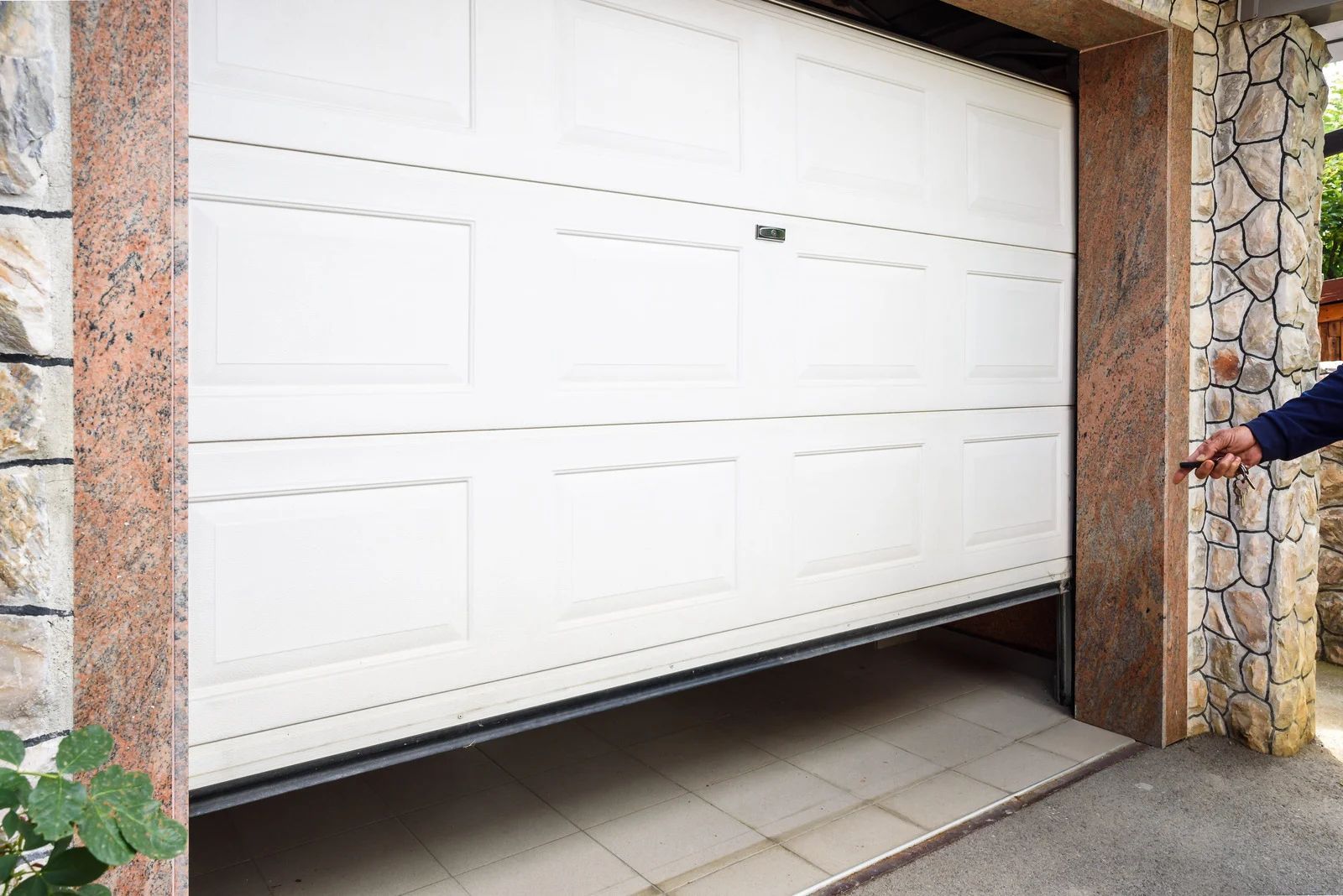
Garage Door Reverses Before Hitting the Floor? What's Misadjusted
August 30, 2026
Quick Answer:
A garage door that reverses before it reaches the floor is almost always telling you its opener thinks it hit something. The two most common culprits are a down travel limit that's set too short and a photo-eye sensor pair that's dirty, misaligned, or blocked. Less often, the reversal points to a bent track, a dragging roller, or a spring that's lost tension and is making the door feel heavier than the opener expects. Start with the sensors and the door track, since those are safe to check yourself. If the door still won't close after that, the opener's travel and force settings likely need adjustment, and if you notice cable fraying or a spring that looks stretched or gapped, stop and call a professional instead of touching it.
Why This Happens in the First Place
Every garage door opener built in the last few decades has to comply with a federal safety standard that requires an auto-reverse function. The opener is designed to treat any unexpected resistance on the way down as a possible obstruction, whether that's a toy, a pet, or a person, and it yanks the door back open rather than risk a crush injury. That's a good thing. The problem is that the same system that protects your family can also get triggered by something completely harmless, like a door that's supposed to close two more inches but the opener thinks it's already at the floor.
Travel limits tell the opener exactly where "fully open" and "fully closed" are supposed to be. Force settings tell the motor how much resistance it's allowed to push through before deciding something is in the way. These two settings work together, and when either one drifts out of calibration, the door can reverse at almost the exact same spot every time, usually an inch or two above the floor or right as it touches down.
Weather plays a role here too. In a Denver winter, a metal track can contract slightly in the cold, weatherstripping stiffens and adds resistance right at the threshold, and moisture at the base of the door can freeze into a thin layer of ice that the door bumps against on its way down. None of that changes the opener's programmed limits, but it changes how much resistance the door meets in that last foot of travel, which is exactly what the force sensor is watching for.
Start With the Photo-Eye Sensors
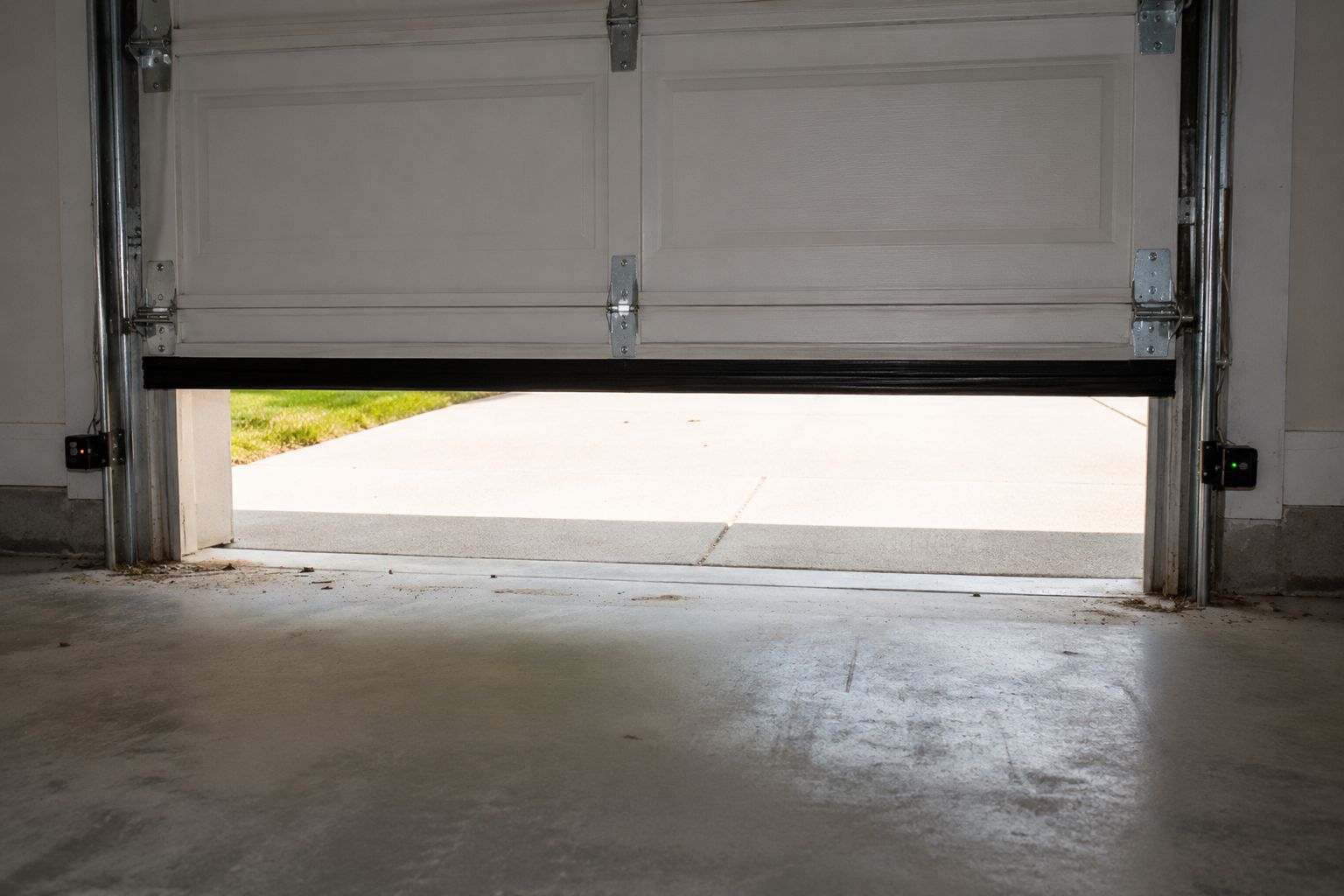
The two small sensor units mounted a few inches off the floor on either side of the track are the first thing to check, because they're the single most common reason a door reverses early, and they're completely safe for a homeowner to inspect.
What to Look For
- A steady, solid light on both sensors. A blinking or flickering light usually means they're out of alignment with each other.
- A clear line of sight between the two units. A leaf, a stray push broom, a parked bike, or a spider web across the beam is enough to trigger a reversal.
- Dust or grime on the lenses, especially after a dry Colorado summer or a salty winter when tracked-in road grime builds up fast.
What to do: Wipe both lenses with a soft cloth, clear anything sitting in the beam path, and check that neither bracket has been bumped loose. If one sensor is tilted even slightly compared to the other, loosen its mounting screw, nudge it gently until the indicator light goes solid, and retighten. Test the door a few times after any adjustment.
If the sensors look aligned, are clean, and nothing is blocking them, the reversal is coming from somewhere else in the system.
Check the Track and Rollers Next
A door that binds anywhere along its track can feel like an obstruction to the opener, even though nothing is actually in the way of the door itself.
Walk the full length of both tracks with the door closed and look for:
- Visible gaps between the track and the wall brackets
- Dents, dirt buildup, or old lubricant that's turned gummy
- Rollers that look worn, flat-sided, or cracked instead of round
A door that's dragging slightly on a rough spot in the track will meet just enough resistance near the bottom of its travel to convince the opener that something is blocking it, which triggers the same auto-reverse response as an actual obstruction. Clean tracks and freely spinning rollers usually solve intermittent reversals that don't seem tied to the sensors at all.
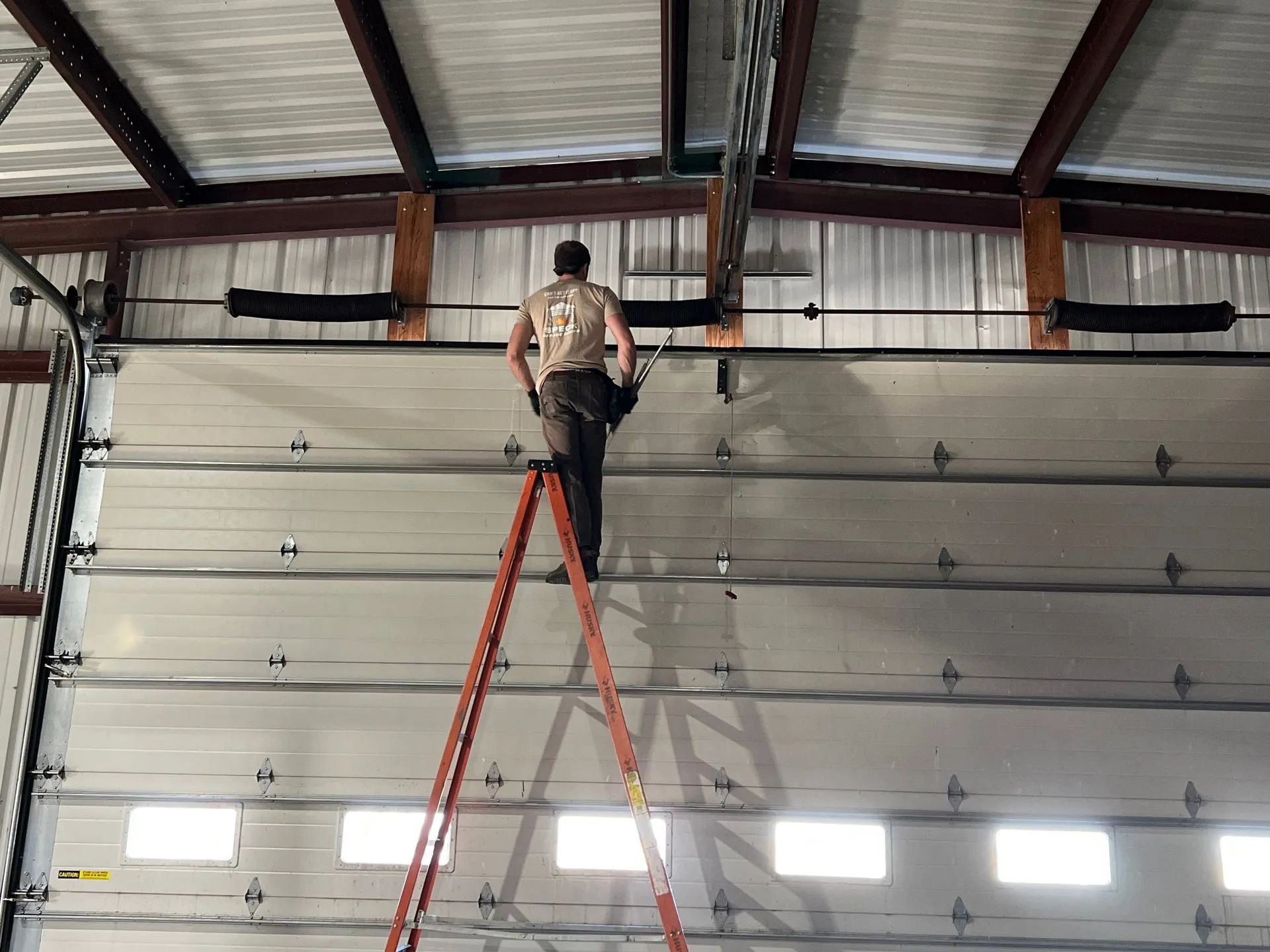
WARNING: If you've checked the sensors and the tracks and the door still reverses, or if you notice a spring that looks stretched, gapped between coils, or visibly different from its partner spring, stop there. Garage door springs, whether torsion springs mounted above the door or extension springs running along the horizontal track, are wound or stretched under extremely high tension to lift a door that can weigh well over a hundred pounds. A spring that's failing doesn't just cause a door to feel heavy or lift unevenly. If it releases suddenly, it can cause serious injury. The same goes for cables that look frayed, kinked, or unspooled from their drum. These components should only be adjusted, repaired, or replaced by a trained technician with the right tools and experience working under load. Don't attempt to release tension, cut a cable, or "test" a spring by hand.
Adjusting Travel and Force Settings Safely
Once sensors, tracks, and hardware are ruled out, the remaining fix usually lives in the opener's travel limit and force settings. Most modern openers have a learn or adjustment panel on the motor unit, often with separate dials or buttons for up limit, down limit, and force.
If you're comfortable working on the opener itself, small changes are the safer approach. Adjust the down travel limit in small increments rather than large turns, since even a minor change can shift where the door stops by a couple of inches. Test the door after every single adjustment rather than making several changes at once, and give the opener a short rest between tests so the motor doesn't overheat from repeated cycling. If the door still reverses after a couple of careful adjustments, or if your opener uses a digital keypad-style setting process you're not familiar with, that's a reasonable point to call in a professional rather than keep guessing.
A Quick Note on Older Openers
If your opener is more than 15 years old, it may not have a modern force-sensing system at all, relying instead on a simpler mechanical limit switch that's prone to slipping out of position on its own over time. These older units tend to need adjustment more often and are also more likely to be paired with worn-out safety features that don't meet current standards. If you're dealing with frequent reversal problems on an older opener, it may be less about a single misadjustment and more a sign the unit itself is due for evaluation.
TIP: Before you reach out for repair, jot down where the door stops each time it reverses. Does it happen at roughly the same spot, a couple of inches up, every time? Does it only happen on cold mornings, or after the door has been sitting closed overnight? Does tapping the wall button to close it again on a second try work fine? That pattern tells a technician a lot before they even arrive, whether it points to a sensor alignment issue, a seasonal track contraction problem, or a force setting that's drifted just enough to matter. A five-minute log saves diagnostic time and often points straight to the fix.
When It's More Than a Simple Adjustment
A door that reverses once in a while after a cold night is a different situation than a door that reverses every single time no matter what you try. If you've cleaned the sensors, checked the tracks, made careful limit adjustments, and the problem persists, or if the door reverses with a loud bang, a jerking motion, or visible strain on one side, it's time to bring in someone who works on these systems daily. A door that's fighting itself on the way down is also putting extra wear on the opener's motor and gearing every time it cycles, which can turn a simple adjustment into a bigger repair if it's ignored for too long.
Frequently Asked Questions
Does a garage door reversing early mean the springs are broken?
Not necessarily. A fully broken spring more often shows up as a door that won't lift at all or feels dramatically heavier than usual, rather than reversing during closing. That said, a spring that's losing tension gradually can contribute to reversal issues, so it's worth having a technician check spring condition if adjustments alone don't resolve the problem.
Can cold weather alone cause a door to reverse before closing?
Cold weather changes how much resistance the door meets at the very bottom of its travel, from stiffer weatherstripping to slight track contraction, and that added resistance is sometimes enough to trip a force setting that was fine in warmer months. It's a real contributing factor, though it's rarely the sole cause on its own.
Is it safe to keep closing the door manually if the opener keeps reversing it?
Occasionally guiding the door by hand while you sort out the cause is fine, but don't make it a long-term habit. Repeated manual overrides can mask a developing spring or cable issue that's better caught early.
Reliable Garage Door Closing Starts With Proper Diagnosis
A garage door that reverses before reaching the floor is often responding to resistance that the opener interprets as an obstruction. Sensors, tracks, rollers, travel limits, and changing weather conditions can all affect how smoothly the door closes, making the exact reversal point an important clue when identifying the underlying issue.
For homeowners in Centennial, CO, these problems can become more noticeable as temperatures change and weatherstripping or moving components respond to seasonal conditions. Speck Garage Doors brings 5 years of experience to diagnosing garage door issues, helping distinguish between simple adjustments and problems involving components that require professional attention.
When basic checks do not resolve repeated reversals, continuing to operate the door can place unnecessary strain on the opener and other hardware. Understanding what the door is communicating through its movement, sounds, and stopping point makes it easier to address the actual cause rather than repeatedly resetting the same symptom.