Loud Grinding or Squealing Garage Door? What Each Noise Means
September 14, 2026
Quick Answer: A grinding sound usually points to worn or dry rollers scraping metal-on-metal against the track, a misaligned track forcing the rollers to fight their way through, or a stripped opener gear inside the motor housing. A squealing or screeching sound is almost always dry hinges or bearing plates that have run out of lubricant, though a binding track can screech too. A sudden bang or pop is a different category entirely — that's often a spring losing tension or a piece of hardware letting go, and it means stop using the door and call a technician. Lubrication and tightening visible hardware are safe homeowner tasks. Anything involving the torsion spring, the cables, or a door that's already sitting crooked in its track is not.
You're standing in the garage on a Tuesday morning, coffee in hand, and you hit the button. The door groans up like it's fighting you the whole way — a harsh, metallic scrape that wasn't there last month. Or maybe it's not a scrape at all. Maybe it's a thin, high squeal that makes you wince, the kind of sound that gets worse every single cycle. Either way, you're not imagining it, and the door isn't being dramatic. It's telling you exactly what's wrong, if you know how to listen.
Garage doors don't go from silent to loud overnight for no reason. A new sound almost always traces back to one part of the system running dry, out of alignment, or under more strain than it was built to handle. The type of sound — grinding versus squealing versus a sharp bang — narrows down the cause fast, often before a technician even opens the garage. Here's how to read what you're hearing, what's safe to check yourself, and where the line sits for calling in a pro.
The Sound Tells You Where to Look
Different failures inside a garage door system make distinctly different noises, and the difference matters more than most homeowners assume. A low, grating scrape reads as metal fighting metal — rollers dragging, a gear stripping, a track pinching something it shouldn't. A squeal sits higher in pitch and usually comes from a joint that's supposed to pivot smoothly and isn't anymore. A bang is neither of those. It's sudden, loud, and usually means something under tension just let go or shifted hard.
Where the sound comes from matters too. A noise that follows the door across its full track — starting quiet near the top and getting worse as the door nears the ground — points to the rollers or the track itself. A noise concentrated near the top of the opening, close to the motor unit, points to the opener. And a noise that happens once, sharply, rather than throughout the cycle, is a different animal from the steady grind of worn hardware.
What a Grinding Sound Usually Means
Grinding is metal scraping against metal, and there are really three places that scrape happens.
Worn Or Dry Rollers
A standard garage door rides on ten to twelve rollers that guide it along steel tracks. Thousands of cycles cause wear, while seized bearings or flattened surfaces make rollers drag instead of rolling. Steel rollers create more noise, while nylon rollers with sealed bearings operate quietly and last longer.
A Misaligned Or Bent Track
If the steel channel guiding the rollers has shifted, bowed, or suffered an impact, the rollers can become trapped through tight sections. The resulting friction creates a harsh, continuous scraping sound that often becomes louder as the door moves farther along its opening or closing cycle.
A Stripped Gear In The Opener
Sometimes the noise seems to come from the door, but the motor is responsible. Most chain and screw-drive openers use a metal worm gear with a nylon gear. Excessive strain, often from a weakened spring, can strip the nylon teeth and leave white plastic shavings inside.
What a Squealing or Screeching Sound Usually Means
Squealing sits in a different register, and it almost always comes down to friction at a pivot point rather than a straight scrape.
Dry Hinges
The hinges connecting each door panel bend as the door curves around the track. Without lubrication, metal pivots rub against each other, creating squealing noises that often appear before other mechanical problems develop.
Dry Bearing Plates
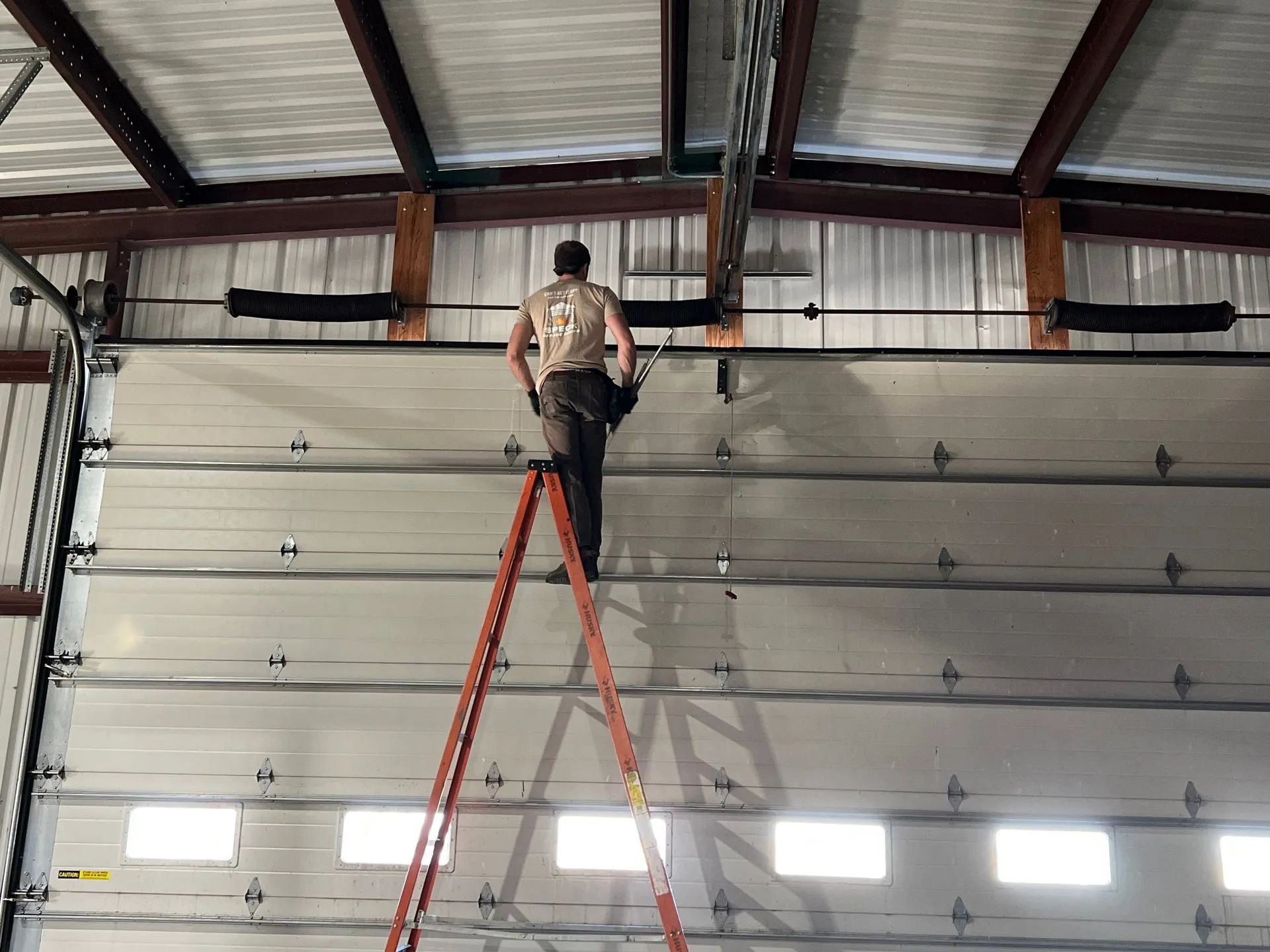
Bearing plates at each end of the torsion spring shaft allow the shaft to rotate freely. When bearings dry out, the shaft grinds against brackets, producing a sharper, thinner squeal than typical roller noise.
A Track That's Binding Rather Than Broken
Sometimes screeching occurs when rollers catch against a slightly misaligned track edge. The track may not be bent, but minor misalignment creates resistance. Fortunately, realignment can often resolve the problem without replacing hardware.
What a Bang, Pop, or Rattle Usually Means
This category is where you stop troubleshooting and start paying attention to safety.
A Loud Bang, Especially From Overhead
A failing torsion spring can release suddenly with a gunshot-like bang. If you hear one, avoid operating the opener, keep your distance from the door, and contact a qualified technician immediately.
A Rattle That Comes And Goes
Loose lag screws, opener mounting brackets, or hardware loosened by years of vibration can create intermittent rattling. While usually less urgent than scraping or squealing, loose components should still be tightened before damage worsens.
A Pop During Opening Or Closing
A softer popping sound can indicate dry torsion spring coils rubbing and catching as they wind and unwind. It signals overdue lubrication, but springs are dangerous components that homeowners should never handle themselves.
WARNING: Torsion and extension springs store enormous force — enough to cause serious injury or worse if a spring or cable releases suddenly. Never attempt to lubricate, adjust, tighten, or replace a spring or cable yourself, and never loosen the bolts on a spring anchor bracket. If your door has come off its track or is hanging crooked, that's a separate safety issue: stop using the opener and leave the door alone until a trained technician arrives.
Why Colorado Winters Turn Up the Volume
If your door got noticeably louder around the season's first hard freeze, that's not a coincidence. Cold, dry air along the Front Range does a few specific things to a garage door system. Standard lubricants thicken in low temperatures, so rollers and hinges that were quietly running dry all summer suddenly announce it the moment the mercury drops. Steel contracts slightly in the cold too, which can tighten tolerances just enough for a marginal roller or a slightly bent track to start scraping when it wasn't before. And after a storm, packed snow or a thin sheet of ice inside the track channel adds resistance the rollers weren't built to push through, which shows up as extra grinding right at the bottom of the door's travel.
None of that means the noise is nothing to worry about. Cold weather doesn't create a new problem so much as it exposes one that was already building. A roller riding on the edge of failure in October is a lot more likely to seize completely once overnight temperatures start dropping into the teens.
DIY-Safe Checks vs What to Leave to a Pro
Some parts of this system are fair game for a homeowner with a ladder and twenty minutes. Others aren't, and mixing the two up is how small jobs turn into emergency calls.
Safe To Do Yourself: Lubricate The Moving Parts
Apply silicone-based garage door lubricant to rollers, hinges, and torsion spring coils. Avoid household oils and WD-40. Clean tracks first to prevent pushing grime deeper into hardware.
Safe To Do Yourself: Tighten Visible, Non-Tensioned Hardware
With the door closed and opener disconnected, safely tighten visible track brackets, opener rail lag screws, and hinge fasteners using a wrench without touching tensioned components.
Not A DIY Job: Anything Involving The Spring Or Cables
Never adjust spring tension, replace cables, or handle bottom brackets under load. Heavy or unbalanced doors indicate spring problems requiring professional service because serious injuries can occur.
Not A DIY Job: Opener Gear Or Motor Issues
Inspecting an opener for stripped gears may be possible, but repairs involve motor components and nearby stored tension. Have a qualified technician handle gear replacement and related repairs.
TIP: Run a simple isolation test before you call anyone. Pull the manual release cord with the door fully closed to disconnect it from the opener, then lift and lower the door by hand. If the grinding or squealing follows the door through the whole cycle, the problem is in the rollers, track, or hinges. If the noise only shows up when the opener runs the door, the motor or drive gear is the likelier source — and that's useful information to give a technician before they even arrive.
What a Technician Checks That You Won't Catch From the Driveway
A trained eye looks past the obvious noise to what's causing it. That usually starts with watching a full cycle to pinpoint exactly where in the door's travel the sound gets worse, then checking roller condition, track alignment, spring tension, and opener gear wear in that order — because a heavy, poorly balanced door will chew through rollers and gears faster than normal use ever would. Fixing the roller that's squealing loudest without checking why the door is straining in the first place is how the same noise shows up again a few months later.
Frequently Asked Questions
Why does my garage door only squeal in cold weather?
Standard lubricant thickens as temperatures drop, so hinges and bearing plates that were barely holding on all summer finally lose what little lubrication remained. A cold-rated silicone lubricant holds up better through a Colorado winter.
Is a grinding noise from the opener dangerous, or just annoying?
On its own, a stripped gear is more inconvenience than hazard, since the door stops moving once it wears through. The real concern is what strained the motor, often a weakening spring that carries risk.
Can I lubricate the torsion spring myself?
You can apply lubricant to the spring coils without touching its tension, which counts as normal maintenance. Never loosen the anchor bolts, adjust the winding, or remove the spring; that belongs to a trained technician.
What does a loud bang from the garage door usually mean?
A sudden, sharp bang almost always means a torsion spring has broken or hardware has failed under tension. Don't run the opener after hearing this. Step back, leave the door alone, and call a technician.
How often should I lubricate a garage door to prevent noise?
Twice a year covers most doors, with an extra pass heading into winter well worth the effort. Doors used daily, or exposed to road salt and grit during snow season, often need lubrication more frequently.
Will a noisy garage door eventually stop working altogether?
Left alone, yes. The friction causing the noise wears down whatever part produces it, whether a roller, a gear, or a hinge. What starts as an annoying sound often ends as a part failing outright.
Listening Closely Keeps Your Garage Door Running
A door that suddenly turns loud is not acting up without reason. Grinding usually points to hardware fighting metal it shouldn't, squealing means a joint has run dry, and a sharp bang signals something under real force just gave way. Reading the sound correctly, then checking what falls within a homeowner's reach, saves both money and risk. Anything tied to spring tension or cables belongs to someone trained to handle that stored force safely, no matter how simple the fix might look.
Speck Garage Doors
has spent 5
years listening to doors across Centennial, CO, and tracing each sound back to its actual cause rather than guessing at a fix. A grinding roller, a dry hinge, or a weakening spring all get treated differently, because the right repair depends on knowing exactly what's straining. That approach keeps a door quiet for years rather than patched together for another season. A garage door that runs smoothly says more about the hands that maintain it than the hardware itself.